


North CarolinaGaming License
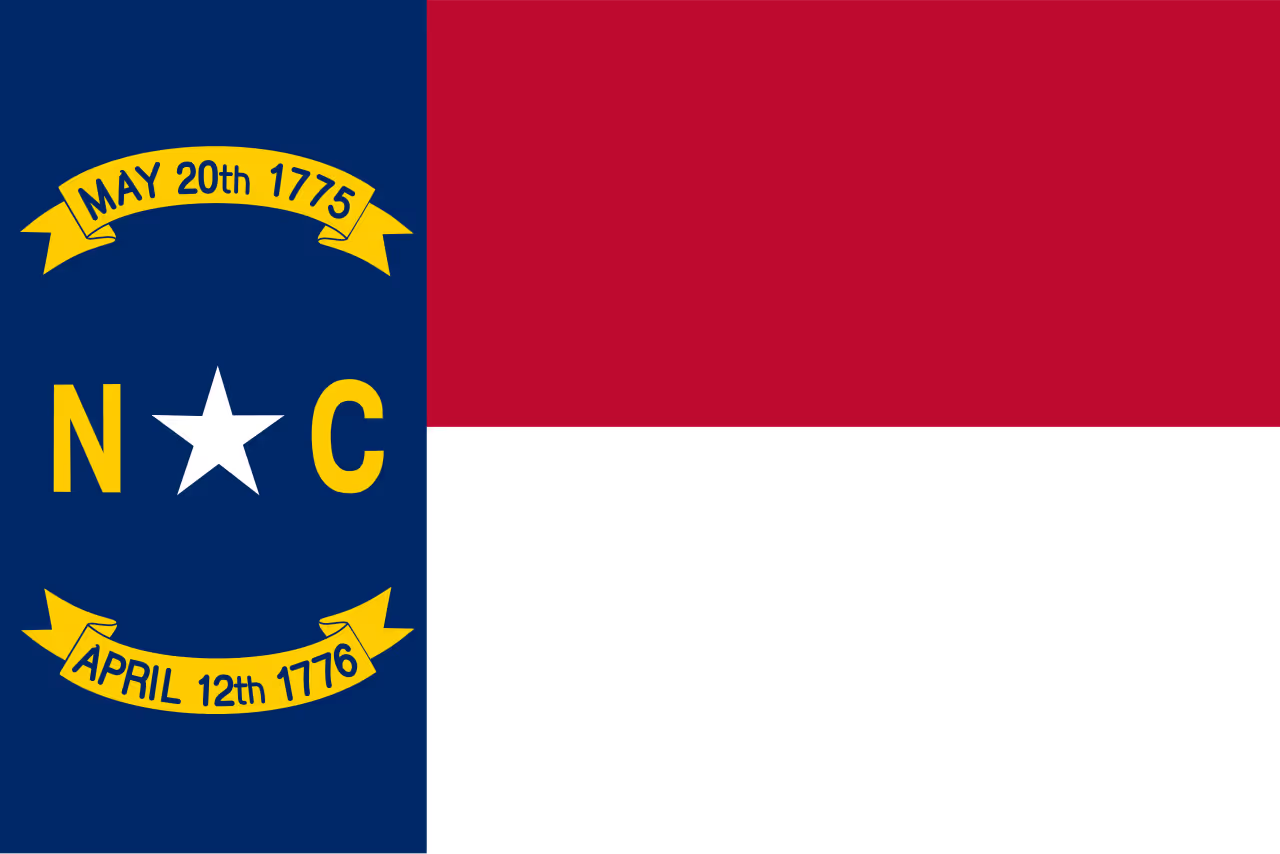
North Carolinalicense
Table of contents

Key advantages of North Carolina Gaming License
Exclusive Market Access
North Carolina limits sports betting to 12, ensuring an exclusive market with less competition.
Legal Protection and Compliance Support

The North Carolina Lottery Commission sets a regulatory framework for fair betting and consumer trust.
Strong Market Potential

North Carolina’s passion for sports creates a big, profitable opportunity for betting operators.
Long-Term Stability

The five-year license validity for operators provides long-term market stability, reducing frequent renewal hassles.
Required documents of North Carolina Gaming License
- Curriculum Vitae (CV)

- Utility Bill
- Reference letter from the lawyer or accountant
- Bank reference letter
- Passport

To get a gambling license in North Carolina, an applicant must be approved by the State Lottery Commission. You need to show your financial records and a strong business plan. Key people must also provide several documents, including full corporate formation and governance documents, a Written Designation Agreement with an approved NC sports team, league, or venue, NC Multi-Jurisdictional Personal Disclosure Form for each key person, organizational charts, key person data, a background record check through FirstPoint, and permission to release their information. We make the process easy: we take care of paperwork, set up KYC and AML compliance, so you can focus on the essentials.
How it works
Obtain a gaming license from 2 months
Navigating the gaming license process can be complex. Here's a streamlined guide to each step.
Types of Gambling Licenses in North Carolina
Interactive Sports Wagering License
The main gambling license in North Carolina is the Interactive Sports Wagering License. The state offers 12 of these licenses, each costing $1 million for a five-year term. To qualify, operators must partner with professional sports teams, motorsports venues, or professional golf tournament organizers. Additionally, operators are required to pay an 18% tax on their adjusted gross revenue.
Service Provider and Supplier Licenses
North Carolina provides two key types of supporting licenses:
Service Provider | Supplier | |
Cost | $50,000 | $30,000 |
Role | Software and platform management | Equipment and goods provision |
Key Requirements | Technical compliance and background checks | Product certification and controls |
Service providers handle software and platform management for licensed operators. Suppliers, on the other hand, deliver the physical equipment and goods needed for gambling operations.
Overview of the North Carolina Gambling License
The state of North Carolina issues licenses only for entities offering interactive sports wagering, because online casinos and other online gambling activities are prohibited and not covered by the state license.
All applicants and their key personnel must undergo thorough background checks, submit detailed financial records, technical documentation, system specifications. They must provide a detailed explanation of how they verify the identity of each player, age, and no prohibited persons.
Technical Requirements
Strong security systems for data protection and fraud prevention
Advanced compliance tools, including geolocation and age verification
Systems designed to ensure fair gaming practices
Real-time monitoring for enhanced oversight
Responsible Gambling standards include:
Operators must offer tools and resources to protect players, such as:
Self-exclusion options and betting limits
24/7 access to problem gambling support services
Real-time tracking of transactions to spot suspicious activity
All licensees are expected to submit regular compliance reports and conduct staff training programs. Before approval, their technical systems undergo rigorous testing, and periodic audits ensure they remain compliant.
Applicants also face a detailed 60-day background check that reviews their criminal, financial, and business history. The North Carolina Lottery Commission uses this process to maintain integrity and safety within the state’s gambling industry.
The local law allows a maximum of 12 licenses for operators that directly offer and accept bets from the customers. A limited competition environment gives operators a lot of opportunities but at the same time it means the necessity of adhering to strict compliance standards, including audits and responsible gaming measures. The regulator watches all license holders closely. Because of this, failing to meet the rules can be very expensive, leading to fines, losing your license, or legal problems. This makes strict compliance and risk management critical for operators.
Renewing North Carolina Gambling License
Since the North Carolina gambling license is valid for five years, operators must start a renewal process in 90 days before expiration. The renewal process usually takes about 60 days, though more complex applications might require additional time. The North Carolina Lottery Commission uses a structured timeline to manage the process:
Timeline | Key Actions | |
Pre-renewal | 90 days before expiration | Operators receive notification and prepare their application. |
Submission | 60 days before expiration | Submit the renewal application and pay the required fee. |
Review | 30-60 days | The commission conducts compliance checks and makes a final decision. |
To renew the license, operators need to provide all financial, technical, and compliance documentation, including proof of responsible gambling practices and background checks for key personnel. Any changes in ownership or management must also be disclosed.
The renewal fees are equal to the license application ones. Interactive Sports Wagering License holders will be charged $1 million for the next five-year term, a Service Provider license holders $50,000, and Supplier license holders $30,000.
Gambling Regulations in North Carolina
North Carolina takes a cautious stance on gambling, allowing only sports betting, the state lottery, and nonprofit-sponsored bingo and raffles. The local regulator, the NC State Lottery Commission, issues licenses for interactive sports wagering, service providers and suppliers.
If you run an online casino, you cannot operate with the North Carolina online gambling license, because this type of gambling activities is totally prohibited in the state.
Licensed gambling operators in North Carolina have to follow strict rules to ensure things are fair and to keep betting safe. These rules cover several areas. For finances and security, operators must have a good internal system, report their money regularly, and use strong security measures. They must also support responsible gaming by offering self-exclusion programs and verifying the age of customers.
Fees and Taxes of the North Carolina Gambling License
Initial Licensing Fees
Operators aiming for a five-year license in North Carolina face a hefty $1 million application fee. Add to that the costs for testing, legal advice, and setting up compliance systems, and it becomes clear that entering this market is no small fear. These high costs ensure that only serious contenders can participate in the state's gambling industry.
The options for service providers and suppliers are more affordable, but still among the highest in the industry. B2B operators must pay $50,000 for a provider license and $30,000 for a supplier license.
Taxes
Running a gambling operation in North Carolina comes with both fixed and variable expenses. The most notable ongoing cost is the 18% privilege tax on net gambling revenues.
Expense Type | Amount/Rate |
License Fee | $1 million |
Privilege Tax | 18% |
Compliance Costs | Variable |
Partner Agreement Fees | Variable |
These expenses underscore the exclusivity of the market, which is limited to just 12 operators.
WHY MGL?
Here are 5 reasons why we are the best fit for your project
1 form
Just one form to fill out — we handle everything else.

30 Minutes
All we need from you to kickstart the process.
1-3 Days
Fast company formation so you can start using your business immediately.
6-7 Weeks
Get your casino licensed.






FAQ
We'll answer
any questions you have
Everything you need to know about Our company. Can't find the answer you're looking for? Please chat to our team.
Foreign companies can apply but must first establish a legal presence in North Carolina. They also need to meet financial, technical, and responsible gambling standards. These rules ensure all operators, regardless of origin, adhere to the same guidelines.
Yes, North Carolina issues distinct licenses for B2C (consumer-facing) operations and B2B (support service providers). This ensures oversight tailored to the specific responsibilities of each type of business.
The licensing process typically takes 60 days after submission, provided the application is complete and the background check is clear. Staying in close contact with regulatory authorities and responding promptly can help avoid delays.
An online gambling license in North Carolina starts at $1 million, with an additional 18% privilege tax.
Ready to start future online casino?
Navigating the gaming license process can be complex. Here's a streamlined guide to each step